 Healing & Tissue RepairIn Stock
Healing & Tissue Repair
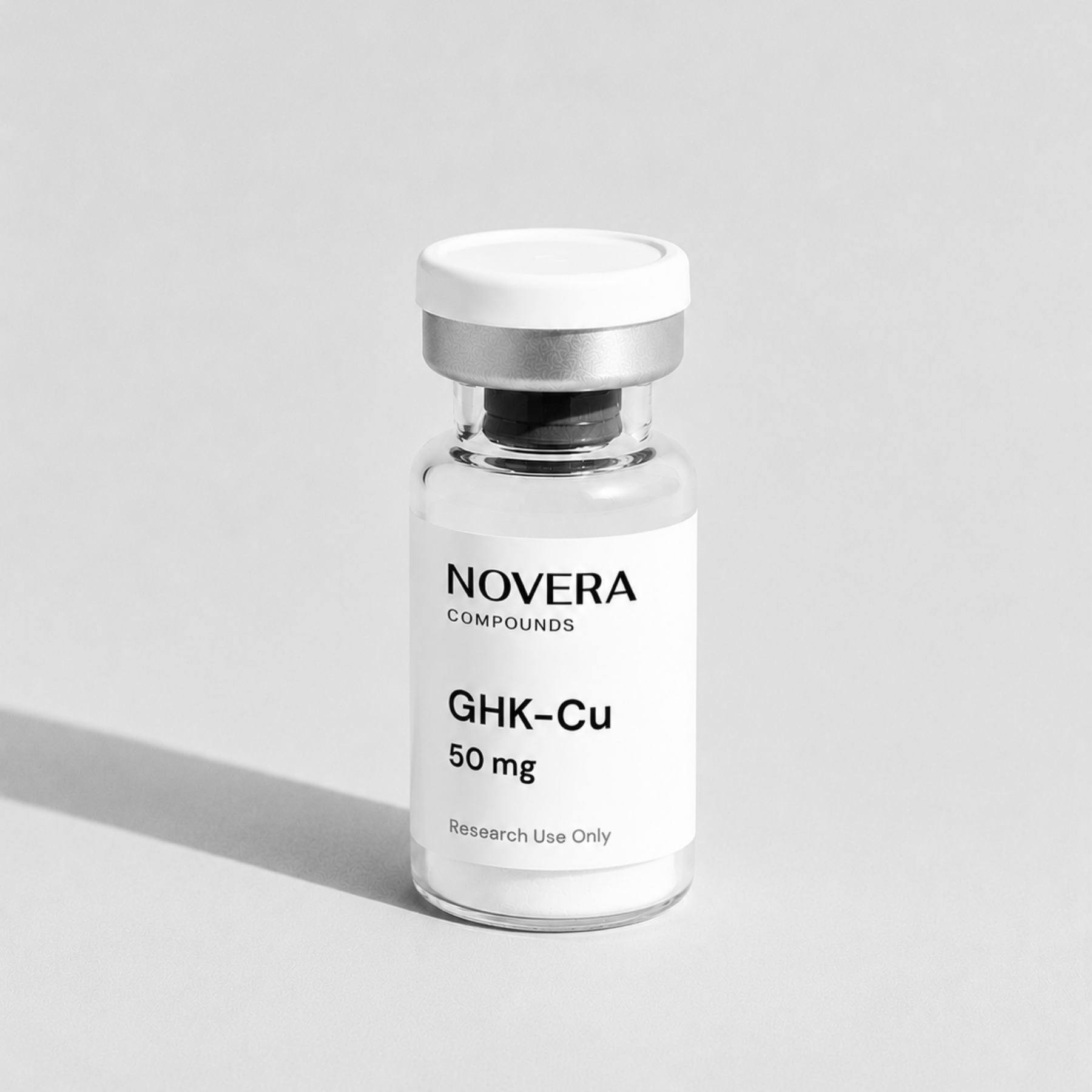
GHK-Cu
Also known as: Copper Peptide, Tripeptide-1 Cu, Prezatide copper acetate
Copper-binding tripeptide widely studied in dermal, connective-tissue, and extracellular-matrix research.
GHK-Cu is the copper(II) complex of the endogenous tripeptide glycyl-L-histidyl-L-lysine (GHK).
First identified in human plasma by Loren Pickart in 1973, it has since become one of the most thoroughly characterized short peptides in connective-tissue and dermatological research.Published literature on GHK-Cu spans more than four decades and includes work on fibroblast signaling, collagen and elastin gene expression, antioxidant pathway modulation, and copper ion transport in tissue-repair contexts.
Gene-expression studies have documented modulation of hundreds of genes involved in extracellular-matrix biology, wound signaling, and anti-inflammatory pathways.GHK-Cu is cataloged in larger mg quantities than typical injectable peptides, reflecting both its stability profile and the broad range of research applications — including topical formulation studies — in which it is used.
Research applications
- Collagen and elastin gene-expression studies
- Fibroblast and dermal-tissue biology
- Extracellular matrix remodeling and wound signaling
- Antioxidant and redox-signaling research
- Copper-ion biology and metalloprotein interactions
Technical profile
- Net content
- 50 mg
- Molecular formula
- C14H21N6O4Cu
- Molecular weight
- 401.91 g/mol
- CAS
- 49557-75-7
- Sequence
- Copper peptide, GHK, Tripeptide, ghkcu, GHK-Cu acetate, Gly-His-Lys-Cu(II)
For research use only. Not for human or veterinary consumption. Not intended to diagnose, treat, cure, or prevent any disease. Catalog availability restricted to verified licensed practitioners.
GHK-Cu is a naturally occurring copper tripeptide complex found in human plasma. It promotes collagen synthesis, skin remodeling, wound healing, and has demonstrated anti-inflammatory and antioxidant properties in research settings.