 Metabolic & Weight ManagementIn Stock
Metabolic & Weight Management
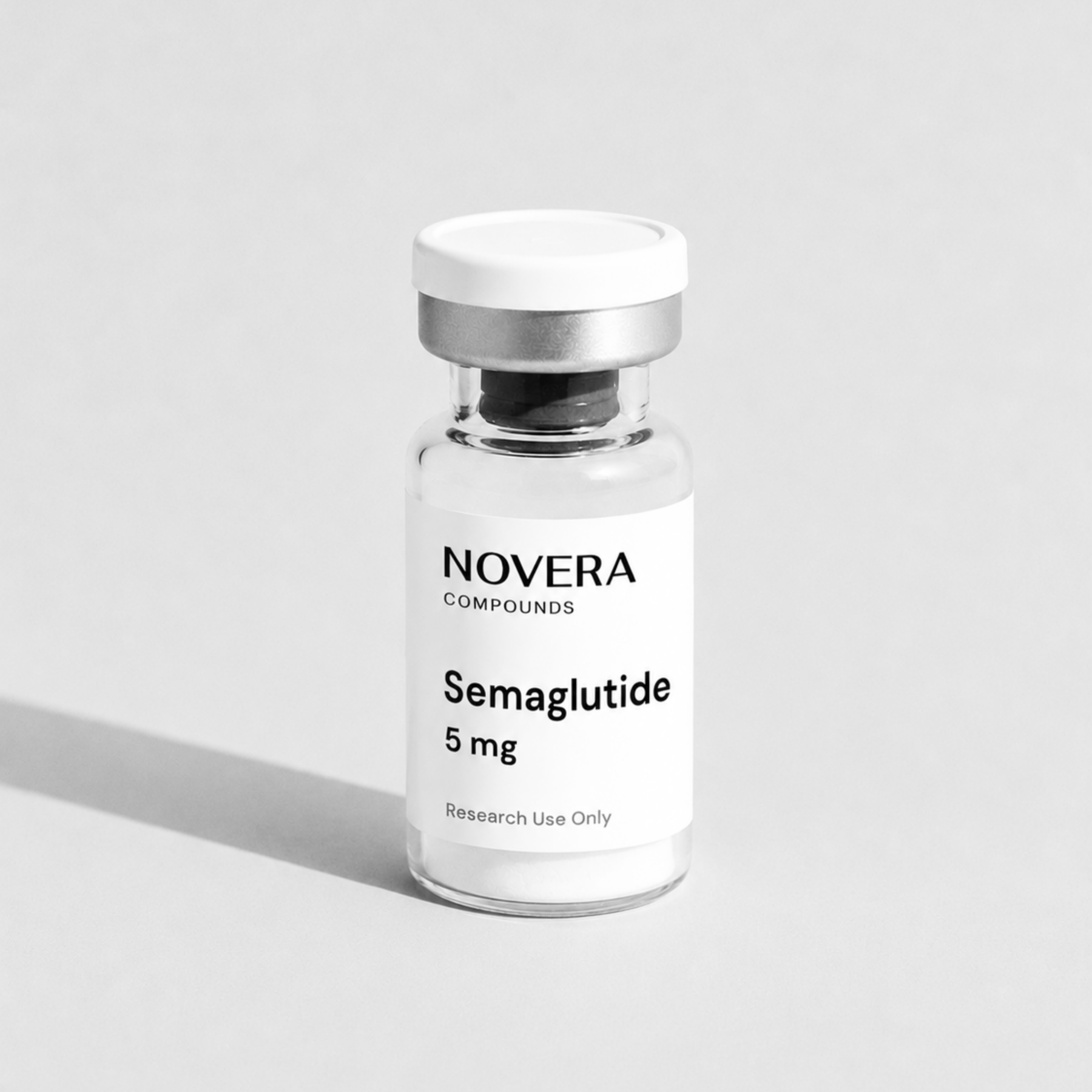
Semaglutide
Also known as: GLP-1 receptor agonist; parent drug: Ozempic, Wegovy, Rybelsus
Long-acting synthetic GLP-1 receptor agonist; parent compound is an FDA-approved pharmaceutical.
Semaglutide is a 31-amino-acid synthetic analog of human glucagon-like peptide-1 (GLP-1) featuring a C18 fatty-acid chain attached via a γGlu-2×OEG spacer to position 26, enabling reversible albumin binding for extended plasma half-life.
It is one of the most extensively studied GLP-1 receptor agonists in the modern pharmacopoeia.Semaglutide's parent pharmaceutical forms are marketed as Ozempic (weekly injection), Wegovy (weekly injection for weight management), and Rybelsus (oral) by Novo Nordisk.
This catalog entry refers exclusively to research-grade material supplied for in-vitro laboratory investigation of GLP-1 receptor signaling and is not the pharmaceutical product.
Research applications include GLP-1R signal-transduction studies, cAMP/PKA pathway investigation, receptor structural biology, and comparative pharmacology with other GLP-1-class and GLP-1/GIP-class peptides.
Research applications
- GLP-1 receptor pharmacology and signaling
- Albumin-binding peptide design studies
- Comparative GLP-1 agonist research
- Metabolic-signaling and insulinotropic research
- Receptor structural biology (cryo-EM reference compound)
Technical profile
- Net content
- 5 mg
- Molecular formula
- C187H291N45O59
- Molecular weight
- 4113.64 g/mol
- CAS
- 910463-68-2
- Sequence
- HAEGTFTSDVSSYLEGQAAKEFIAWLVRGRG (position 26 modified with γGlu-2×OEG-C18 fatty acid chain; Aib at position 2)
For research use only. Not for human or veterinary consumption. Not intended to diagnose, treat, cure, or prevent any disease. Catalog availability restricted to verified licensed practitioners.
Semaglutide is a GLP-1 receptor agonist with an extended half-life achieved through albumin binding. This 5mg formulation is used in metabolic research studying appetite regulation, insulin sensitivity, and weight management mechanisms.